
Discussion
Loading...

#Tag

Log in
  • Sign up
  • About
  • Code of conduct
  • Privacy
  • Users
  • Instances
  • About Bonfire
MikeDunnAuthor
MikeDunnAuthor
@MikeDunnAuthor@kolektiva.social  ·  activity timestamp yesterday

Today in Labor History February 21, 1848: Karl Marx and Friedrich Engels published the “Communist Manifesto,” in Brussels, just as the Revolutions of 1848 began to erupt across Europe. After the French overthrew their monarchy, revolutions broke out in Germany, Italy and Austria. When the Prussian democratic parliament collapsed, and the king imposed new counter-revolutionary measures, Marx moved to Paris, then London, where he and his family lived in poverty while he continued to publish. He wrote his most important work there, “Das Kapital.”

#workingclass #LaborHistory #KarlMarx #FriedrichEngels #communism #CommunistManifesto #kapital #Revolution #paris #london
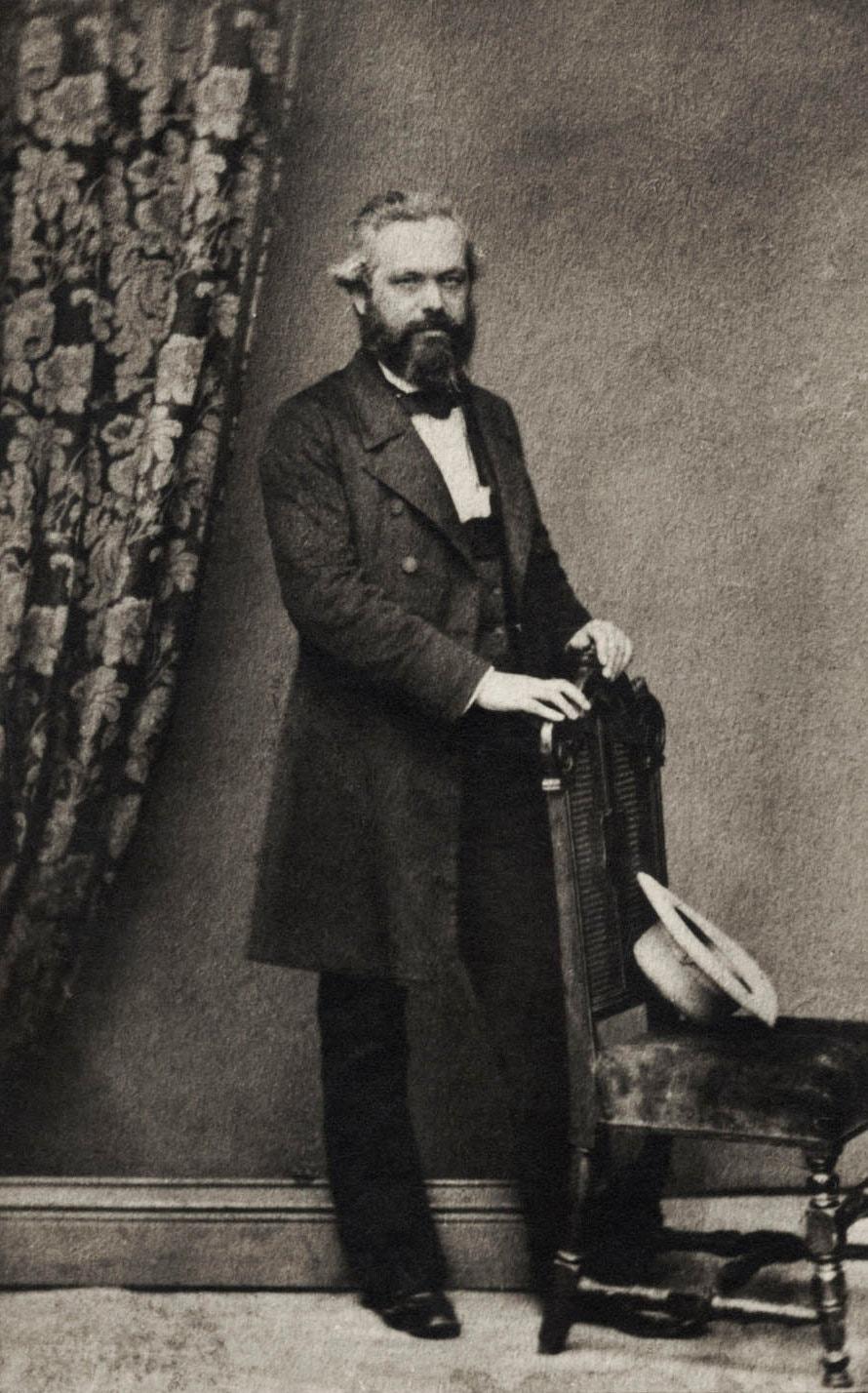

Earliest known photograph taken of Marx in London, 1861. By Richard Beard - Monz, Heinz: Karl Marx. Grundlagen der Entwicklung zu Leben und Werk, Trier 1973, Public Domain, https://commons.wikimedia.org/w/index.php?curid=91837099
  • Copy link
  • Flag this post
  • Block
ophiocephalic 🐍 boosted
David Castleton (Author)
@david_castleton@universeodon.com  ·  activity timestamp 4 days ago

Established in 1854, the London Necropolis Railway aimed to relieve pressure on overcrowded city churchyards by whisking the dead out to Brookwood Cemetery, Surrey. Its station, near Waterloo, featured a steam-powered coffin lift & a glass roof so no shadow would be cast on the hearse carriage. Nearby railway arches acted as mortuaries and coffins were kept in stock so guests dying unexpectedly in hotels could be discreetly removed. The station contained many waiting rooms, in which funeral services could be held, and customers could purchase first, second and third-class funeral packages. The service wound down after World War II, but the station office building can still be seen on Westminster Bridge Road. #WyrdWednesday #history #gothic #folklore #architecture #death #weird #trains #railway #London #psychogeography #graveyard

Station office of the London Necropolis Railway, near Waterloo. A four-storey Victorian building, blending Baroque and Neo-classical styles.
  • Copy link
  • Flag this post
  • Block
David Castleton (Author)
@david_castleton@universeodon.com  ·  activity timestamp 4 days ago

Established in 1854, the London Necropolis Railway aimed to relieve pressure on overcrowded city churchyards by whisking the dead out to Brookwood Cemetery, Surrey. Its station, near Waterloo, featured a steam-powered coffin lift & a glass roof so no shadow would be cast on the hearse carriage. Nearby railway arches acted as mortuaries and coffins were kept in stock so guests dying unexpectedly in hotels could be discreetly removed. The station contained many waiting rooms, in which funeral services could be held, and customers could purchase first, second and third-class funeral packages. The service wound down after World War II, but the station office building can still be seen on Westminster Bridge Road. #WyrdWednesday #history #gothic #folklore #architecture #death #weird #trains #railway #London #psychogeography #graveyard

Station office of the London Necropolis Railway, near Waterloo. A four-storey Victorian building, blending Baroque and Neo-classical styles.
  • Copy link
  • Flag this post
  • Block

Bonfire social

This is a bonfire demo instance for testing purposes

Bonfire social: About · Code of conduct · Privacy · Users · Instances
Bonfire social · 1.0.1 no JS en
Automatic federation enabled
Log in Create account
  • Explore
  • About
  • Members
  • Code of Conduct