Discussion
Loading...

#Tag

Log in
  • Sign up
  • About
  • Code of conduct
  • Privacy
  • Users
  • Instances
  • About Bonfire
Lord Caramac the Clueless, KSC boosted
Christina Dongowski
Christina Dongowski
@Tinido@chaos.social  ·  activity timestamp 4 hours ago

Super Fun für Sprach-Nerds, Weird Fiction-Fans und alle, die gerne neue Sachen lernen: Diese Geschichte wird jeden Absatz 100 Jahre älter (& gruseliger), am Schluss sind wir um 1.000 sprachlich angelangt. Bis wann könnt Ihr verstehen, was da steht? Danach erklärt ein Sprachhistoriker die Veränderungen, die ihr da rückwärts mitgemacht habt.

#linguistics #historyoflanguage #language #literature #learning

https://www.deadlanguagesociety.com/p/how-far-back-in-time-understand-english
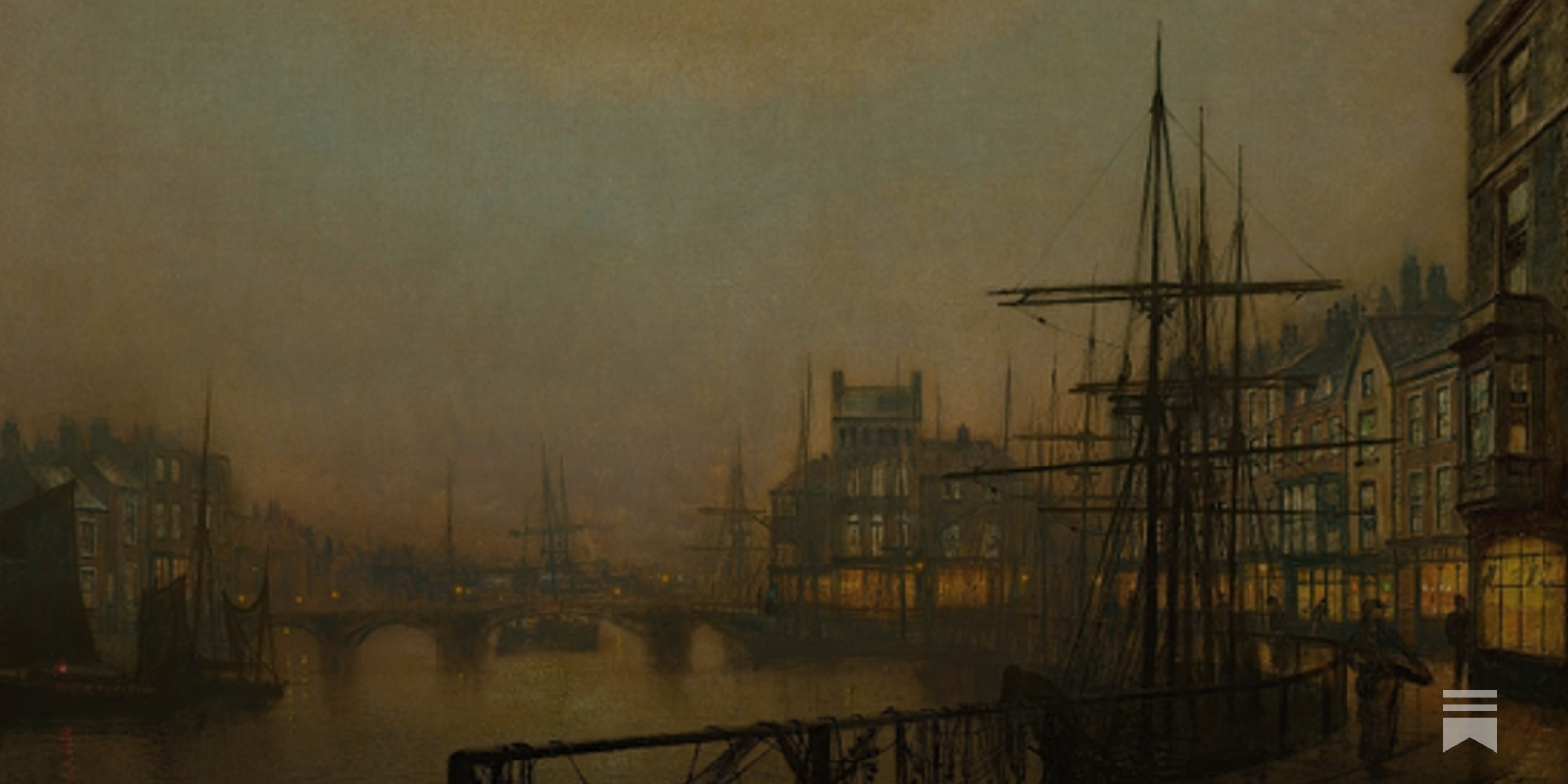
How far back in time can you understand English?

An experiment in language change
  • Copy link
  • Flag this post
  • Block
Christina Dongowski
Christina Dongowski
@Tinido@chaos.social  ·  activity timestamp 4 hours ago

Super Fun für Sprach-Nerds, Weird Fiction-Fans und alle, die gerne neue Sachen lernen: Diese Geschichte wird jeden Absatz 100 Jahre älter (& gruseliger), am Schluss sind wir um 1.000 sprachlich angelangt. Bis wann könnt Ihr verstehen, was da steht? Danach erklärt ein Sprachhistoriker die Veränderungen, die ihr da rückwärts mitgemacht habt.

#linguistics #historyoflanguage #language #literature #learning

https://www.deadlanguagesociety.com/p/how-far-back-in-time-understand-english
How far back in time can you understand English?

An experiment in language change
  • Copy link
  • Flag this post
  • Block
Project Gutenberg
Project Gutenberg
@gutenberg_org@mastodon.social  ·  activity timestamp 6 hours ago

Elizabeth Cady Stanton Is Known as the Woman Behind the Suffrage Movement. A New Book Reveals the Story Behind Her Tenacity

Her role as a historic hero or villain depends on the movement in question, but looking at her as a mother and daughter adds depth to her legend

by Lucia Graves

https://www.smithsonianmag.com/history/elizabeth-cady-stanton-known-woman-behind-suffrage-movement-new-book-reveals-tenacity-180988092/?utm_source=smithsoniandaily&utm_medium=email&utm_campaign=editorial&lctg=93133550

Elizabeth Stanton at PG:
https://www.gutenberg.org/ebooks/author/3186

#books #literature #feminism

Elizabeth Cady Stanton (1815-1902)

A sepia-toned portrait photograph of Elizabeth Stanton seated and turned slightly to one side. She has a full head of white curly hair, cropped close to the head, with a small dark cap or ornament perched at the top. A long dark lace veil falls from the cap over her shoulder and drapes across her lap. She wears a dark dress with a lighter collar or chemise visible at the neckline, and a long string of dark beads around her neck. Her hands rest quietly in her lap, one slightly over the other. Her expression is composed and direct, with a calm, self-possessed dignity. 

https://en.wikipedia.org/wiki/Elizabeth_Cady_Stanton#/media/File:Elizabeth_Stanton.jpg
Elizabeth Cady Stanton (1815-1902) A sepia-toned portrait photograph of Elizabeth Stanton seated and turned slightly to one side. She has a full head of white curly hair, cropped close to the head, with a small dark cap or ornament perched at the top. A long dark lace veil falls from the cap over her shoulder and drapes across her lap. She wears a dark dress with a lighter collar or chemise visible at the neckline, and a long string of dark beads around her neck. Her hands rest quietly in her lap, one slightly over the other. Her expression is composed and direct, with a calm, self-possessed dignity. https://en.wikipedia.org/wiki/Elizabeth_Cady_Stanton#/media/File:Elizabeth_Stanton.jpg
Project Gutenberg

Books by Stanton, Elizabeth Cady

Project Gutenberg offers 77,820 free eBooks for Kindle, iPad, Nook, Android, and iPhone.
Smithsonian Magazine

Elizabeth Cady Stanton Is Known as the Woman Behind the Suffrage Movement. A New Book Reveals the Story Behind Her Tenacity

Her role as a historic hero or villain depends on the movement in question, but looking at her as a mother and daughter adds depth to her legend
  • Copy link
  • Flag this post
  • Block
ophiocephalic 🐍 boosted
David Castleton (Author)
@david_castleton@universeodon.com  ·  activity timestamp 21 hours ago

John Cowper Powys was a highly eccentric British writer, whose extremely long novels explored folklore, landscape and mythology. Though some were set in the South West of England, Powys later reinvented himself as a kind of wizard Welshman. His magnum opus, Porius, is around 1000 pages long and features Merlin, King Arthur, the bard Taliessin, Neanderthal giants, the cult of Mithras, and an alchemical child. Two accounts of bilocation (being in two places simultaneously) are associated with Powys. In one incident, he promised to appear to a friend at precisely two o'clock the following day. At the appointed time, the friend looked up and saw Powys before his image slowly faded. The other account involved him appearing at a hotel to a nephew who had annoyed him, bursting through some doors and shouting "No tea! No tea!" The nephew later asserted there was no way Powys could have been at the hotel at that time. #literature #folklore #mythology #weird #paranormal #books #occult

Photo of Powys in late middle age. He is wearing a coat and suit and clasping a walking stick. He is seated and looking to one side with an intense stare.
  • Copy link
  • Flag this post
  • Block
David Castleton (Author)
@david_castleton@universeodon.com  ·  activity timestamp 21 hours ago

John Cowper Powys was a highly eccentric British writer, whose extremely long novels explored folklore, landscape and mythology. Though some were set in the South West of England, Powys later reinvented himself as a kind of wizard Welshman. His magnum opus, Porius, is around 1000 pages long and features Merlin, King Arthur, the bard Taliessin, Neanderthal giants, the cult of Mithras, and an alchemical child. Two accounts of bilocation (being in two places simultaneously) are associated with Powys. In one incident, he promised to appear to a friend at precisely two o'clock the following day. At the appointed time, the friend looked up and saw Powys before his image slowly faded. The other account involved him appearing at a hotel to a nephew who had annoyed him, bursting through some doors and shouting "No tea! No tea!" The nephew later asserted there was no way Powys could have been at the hotel at that time. #literature #folklore #mythology #weird #paranormal #books #occult

Photo of Powys in late middle age. He is wearing a coat and suit and clasping a walking stick. He is seated and looking to one side with an intense stare.
  • Copy link
  • Flag this post
  • Block
rag. Gustavino Bevilacqua boosted
Project Gutenberg
Project Gutenberg
@gutenberg_org@mastodon.social  ·  activity timestamp yesterday

How Medieval Women Expressed Their ‘Forbidden’ Emotions

Upper-class women used letters and embroidery to reflect on their inner lives

by Pragya Agarwal (from the archives)

https://www.smithsonianmag.com/history/how-medieval-women-expressed-their-forbidden-emotions-180983953/?utm_source=smithsoniandaily&utm_medium=email&utm_campaign=editorial&lctg=93133550

Medieval women at PG:
https://www.gutenberg.org/ebooks/search/?query=medieval+women

#books #literature #womeninart

Marie de France, from an illuminated manuscript now in the Bibliothèque nationale de France: BnF, Arsenal Library, Ms. 3142 fol. 256.

A woman is depicted standing and leaning slightly forward over an open book resting on an elegant white lectern with a decorative pedestal base. She wears a flowing pale cream or white robe that pools softly at her feet, with blue sleeves visible beneath, and a white veil or wimple covering her hair. Her face  small, calm features with a downward gaze directed at the page. One hand  reaches toward the open book as if reading or writing. The lectern stands on a terracotta-red bench or platform. Behind her, a trefoil arch frames the scene. 

https://en.wikipedia.org/wiki/Marie_de_France#/media/File:Marie_de_France_1.tif
Marie de France, from an illuminated manuscript now in the Bibliothèque nationale de France: BnF, Arsenal Library, Ms. 3142 fol. 256. A woman is depicted standing and leaning slightly forward over an open book resting on an elegant white lectern with a decorative pedestal base. She wears a flowing pale cream or white robe that pools softly at her feet, with blue sleeves visible beneath, and a white veil or wimple covering her hair. Her face small, calm features with a downward gaze directed at the page. One hand reaches toward the open book as if reading or writing. The lectern stands on a terracotta-red bench or platform. Behind her, a trefoil arch frames the scene. https://en.wikipedia.org/wiki/Marie_de_France#/media/File:Marie_de_France_1.tif
Project Gutenberg

Books: medieval women

Project Gutenberg offers 77,809 free eBooks for Kindle, iPad, Nook, Android, and iPhone.
Smithsonian Magazine

How Medieval Women Expressed Their 'Forbidden' Emotions

Upper-class women used letters and embroidery to reflect on their inner lives
  • Copy link
  • Flag this post
  • Block
Project Gutenberg
Project Gutenberg
@gutenberg_org@mastodon.social  ·  activity timestamp yesterday

How Medieval Women Expressed Their ‘Forbidden’ Emotions

Upper-class women used letters and embroidery to reflect on their inner lives

by Pragya Agarwal (from the archives)

https://www.smithsonianmag.com/history/how-medieval-women-expressed-their-forbidden-emotions-180983953/?utm_source=smithsoniandaily&utm_medium=email&utm_campaign=editorial&lctg=93133550

Medieval women at PG:
https://www.gutenberg.org/ebooks/search/?query=medieval+women

#books #literature #womeninart

Marie de France, from an illuminated manuscript now in the Bibliothèque nationale de France: BnF, Arsenal Library, Ms. 3142 fol. 256.

A woman is depicted standing and leaning slightly forward over an open book resting on an elegant white lectern with a decorative pedestal base. She wears a flowing pale cream or white robe that pools softly at her feet, with blue sleeves visible beneath, and a white veil or wimple covering her hair. Her face  small, calm features with a downward gaze directed at the page. One hand  reaches toward the open book as if reading or writing. The lectern stands on a terracotta-red bench or platform. Behind her, a trefoil arch frames the scene. 

https://en.wikipedia.org/wiki/Marie_de_France#/media/File:Marie_de_France_1.tif
Marie de France, from an illuminated manuscript now in the Bibliothèque nationale de France: BnF, Arsenal Library, Ms. 3142 fol. 256. A woman is depicted standing and leaning slightly forward over an open book resting on an elegant white lectern with a decorative pedestal base. She wears a flowing pale cream or white robe that pools softly at her feet, with blue sleeves visible beneath, and a white veil or wimple covering her hair. Her face small, calm features with a downward gaze directed at the page. One hand reaches toward the open book as if reading or writing. The lectern stands on a terracotta-red bench or platform. Behind her, a trefoil arch frames the scene. https://en.wikipedia.org/wiki/Marie_de_France#/media/File:Marie_de_France_1.tif
Project Gutenberg

Books: medieval women

Project Gutenberg offers 77,809 free eBooks for Kindle, iPad, Nook, Android, and iPhone.
Smithsonian Magazine

How Medieval Women Expressed Their 'Forbidden' Emotions

Upper-class women used letters and embroidery to reflect on their inner lives
  • Copy link
  • Flag this post
  • Block
Project Gutenberg
Project Gutenberg
@gutenberg_org@mastodon.social  ·  activity timestamp 2 days ago

"Cold in the earth—and the deep snow piled above thee,
Far, far, removed, cold in the dreary grave!
Have I forgot, my only Love, to love thee,
Severed at last by Time's all-severing wave?"

How Wuthering Heights was shaped by Emily Brontë’s gothic poetry

Emily Brontë’s poetry is full of haunting love, grief and death.

by Claire O'Callaghan

https://theconversation.com/how-wuthering-heights-was-shaped-by-emily-brontes-gothic-poetry-275948?utm_medium=email&utm_campaign=Latest%20from%20The%20Conversation%20for%20February%2019%202026%20-%203680937628&utm_content=Latest%20from%20The%20Conversation%20for%20February%2019%202026%20-%203680937628+CID_615a3bba18c77b3d9714f9e409741922&utm_source=campaign_monitor_uk&utm_term=How%20Wuthering%20Heights%20was%20shaped%20by%20Emily%20Bronts%20gothic%20poetry

Poems by Currer, Ellis, and Acton Bell at PG:
https://www.gutenberg.org/ebooks/1019

#books #literature #poetry

Title page of the book Poems by Currer, Ellis, and Acton Bell

Authors: Charlotte Brontë
Anne Brontë
Emily Brontë

A title page from an 1846 publication on aged cream paper. At the very top, a handwritten pencil inscription reads "Brontë Charlotte" in a casual, slightly slanted hand. The printed text is centered and typeset in a spare, classical style with generous spacing between elements. 
Below a small decorative wavy rule, the publication details appear at the bottom:
LONDON:
SMITH, ELDER AND CO., 65, CORNHILL.
1846.

The layout is minimal and elegant, with wide margins and abundant white space giving it a restrained, dignified character typical of mid-Victorian book design.

https://archive.org/details/poemsbycurrerell00bron/page/n4/mode/1up
Title page of the book Poems by Currer, Ellis, and Acton Bell Authors: Charlotte Brontë Anne Brontë Emily Brontë A title page from an 1846 publication on aged cream paper. At the very top, a handwritten pencil inscription reads "Brontë Charlotte" in a casual, slightly slanted hand. The printed text is centered and typeset in a spare, classical style with generous spacing between elements. Below a small decorative wavy rule, the publication details appear at the bottom: LONDON: SMITH, ELDER AND CO., 65, CORNHILL. 1846. The layout is minimal and elegant, with wide margins and abundant white space giving it a restrained, dignified character typical of mid-Victorian book design. https://archive.org/details/poemsbycurrerell00bron/page/n4/mode/1up
Project Gutenberg

Poems by Currer, Ellis, and Acton Bell by Brontë, Brontë, and Brontë

Free kindle book and epub digitized and proofread by volunteers.
The Conversation

How Wuthering Heights was shaped by Emily Brontë’s gothic poetry

Emily Brontë’s poetry is full of haunting love, grief and death.
⁂
More from
The Conversation UK
  • Copy link
  • Flag this post
  • Block
GhostOnTheHalfShell boosted
Project Gutenberg
Project Gutenberg
@gutenberg_org@mastodon.social  ·  activity timestamp 2 days ago

The bookends of time

Nothing lasts forever: not humanity, not Earth, not the Universe. But finitude confers an indelible meaning to our lives

by Thomas Moynihan

https://aeon.co/essays/how-humanity-moved-from-eternal-to-bookended-time?utm_source=Aeon+Newsletter&utm_campaign=d7a6d9f4aa-EMAIL_CAMPAIGN_2026_02_19&utm_medium=email&utm_term=0_-4ef8a26106-72664972

Cosmology at PG:
https://www.gutenberg.org/ebooks/subjects/search/?query=cosmology

#books #literature #cosmology

From the British Museum: Title-page to Hobbes's 'Leviathan' (London: Andrew Cooke, 1651): an allegory of governance and the nature of civil and ecclesiastical authority. A crowned man whose body is made of numerous human bodies, emerges from a mountain at the foot of which is a city, holding a sword in his right hand and a crozier in in left hand; below is the title inscribed on a tapestry and surrounded by ten framed allegories: castle, crown, cannon, military trophies, battle on the left, church, bishop mitre, thunder, inscribed trident and forks, and assembly of magistrates;. 1651

https://en.wikipedia.org/wiki/Leviathan_(Hobbes_book)#/media/File:Leviathan_frontispiece_cropped_British_Museum.jpg

https://www.gutenberg.org/ebooks/3207
From the British Museum: Title-page to Hobbes's 'Leviathan' (London: Andrew Cooke, 1651): an allegory of governance and the nature of civil and ecclesiastical authority. A crowned man whose body is made of numerous human bodies, emerges from a mountain at the foot of which is a city, holding a sword in his right hand and a crozier in in left hand; below is the title inscribed on a tapestry and surrounded by ten framed allegories: castle, crown, cannon, military trophies, battle on the left, church, bishop mitre, thunder, inscribed trident and forks, and assembly of magistrates;. 1651 https://en.wikipedia.org/wiki/Leviathan_(Hobbes_book)#/media/File:Leviathan_frontispiece_cropped_British_Museum.jpg https://www.gutenberg.org/ebooks/3207
Project Gutenberg

Subjects: cosmology

Project Gutenberg offers 77,797 free eBooks for Kindle, iPad, Nook, Android, and iPhone.
  • Copy link
  • Flag this post
  • Block
Project Gutenberg
Project Gutenberg
@gutenberg_org@mastodon.social  ·  activity timestamp 2 days ago

The bookends of time

Nothing lasts forever: not humanity, not Earth, not the Universe. But finitude confers an indelible meaning to our lives

by Thomas Moynihan

https://aeon.co/essays/how-humanity-moved-from-eternal-to-bookended-time?utm_source=Aeon+Newsletter&utm_campaign=d7a6d9f4aa-EMAIL_CAMPAIGN_2026_02_19&utm_medium=email&utm_term=0_-4ef8a26106-72664972

Cosmology at PG:
https://www.gutenberg.org/ebooks/subjects/search/?query=cosmology

#books #literature #cosmology

From the British Museum: Title-page to Hobbes's 'Leviathan' (London: Andrew Cooke, 1651): an allegory of governance and the nature of civil and ecclesiastical authority. A crowned man whose body is made of numerous human bodies, emerges from a mountain at the foot of which is a city, holding a sword in his right hand and a crozier in in left hand; below is the title inscribed on a tapestry and surrounded by ten framed allegories: castle, crown, cannon, military trophies, battle on the left, church, bishop mitre, thunder, inscribed trident and forks, and assembly of magistrates;. 1651

https://en.wikipedia.org/wiki/Leviathan_(Hobbes_book)#/media/File:Leviathan_frontispiece_cropped_British_Museum.jpg

https://www.gutenberg.org/ebooks/3207
From the British Museum: Title-page to Hobbes's 'Leviathan' (London: Andrew Cooke, 1651): an allegory of governance and the nature of civil and ecclesiastical authority. A crowned man whose body is made of numerous human bodies, emerges from a mountain at the foot of which is a city, holding a sword in his right hand and a crozier in in left hand; below is the title inscribed on a tapestry and surrounded by ten framed allegories: castle, crown, cannon, military trophies, battle on the left, church, bishop mitre, thunder, inscribed trident and forks, and assembly of magistrates;. 1651 https://en.wikipedia.org/wiki/Leviathan_(Hobbes_book)#/media/File:Leviathan_frontispiece_cropped_British_Museum.jpg https://www.gutenberg.org/ebooks/3207
Project Gutenberg

Subjects: cosmology

Project Gutenberg offers 77,797 free eBooks for Kindle, iPad, Nook, Android, and iPhone.
  • Copy link
  • Flag this post
  • Block
rag. Gustavino Bevilacqua boosted
Project Gutenberg
Project Gutenberg
@gutenberg_org@mastodon.social  ·  activity timestamp 3 days ago

How reading books regulates your nervous system

Books don’t just stimulate the mind — they trigger physiological changes throughout the body.

by Anne-Laure Le Cunff

https://bigthink.com/mind-behavior/how-reading-books-regulates-your-nervous-system/

#books #literature

Camillo Golgi's image of a dog’s olfactory bulb from his Sulla fina anatomia degli organi centrali del sistema nervoso, 1885.

A detailed anatomical illustration on aged cream paper showing layered neural structures of a dog's olfactory bulb. Large, bold black neurons dominate the middle sections, their sprawling dendrites branching upward like bare winter trees. At the top, shaded gray dome-shaped glomeruli are populated with star-shaped red neurons whose processes weave through flowing parallel fiber bundles. Slender blue threadlike fibers run vertically throughout, contrasting with the heavy black axons. At the bottom, finer and more delicate cells scatter into an increasingly sparse network of thin black lines. The overall composition has a striking visual rhythm, moving from dense complexity at the top to open, airy tracery at the bottom, with letters (a, b, d) annotating specific structures throughout.

https://commons.wikimedia.org/wiki/Category:Camillo_Golgi#/media/File:Camillo_Golgi's_image_of_a_dog%E2%80%99s_olfactory_bulb_(detail_2).jpg
Camillo Golgi's image of a dog’s olfactory bulb from his Sulla fina anatomia degli organi centrali del sistema nervoso, 1885. A detailed anatomical illustration on aged cream paper showing layered neural structures of a dog's olfactory bulb. Large, bold black neurons dominate the middle sections, their sprawling dendrites branching upward like bare winter trees. At the top, shaded gray dome-shaped glomeruli are populated with star-shaped red neurons whose processes weave through flowing parallel fiber bundles. Slender blue threadlike fibers run vertically throughout, contrasting with the heavy black axons. At the bottom, finer and more delicate cells scatter into an increasingly sparse network of thin black lines. The overall composition has a striking visual rhythm, moving from dense complexity at the top to open, airy tracery at the bottom, with letters (a, b, d) annotating specific structures throughout. https://commons.wikimedia.org/wiki/Category:Camillo_Golgi#/media/File:Camillo_Golgi's_image_of_a_dog%E2%80%99s_olfactory_bulb_(detail_2).jpg
Big Think

How reading books regulates your nervous system

Books don’t just stimulate the mind — they trigger physiological changes throughout the body.
  • Copy link
  • Flag this post
  • Block
oldguy52 - resist, live, love boosted
EveryLibrary
EveryLibrary
@everylibrary@mastodon.social  ·  activity timestamp 6 days ago

Let’s show that Americans love their libraries! Like, follow, and share!

#library #libraries #read #reading #book #books #librarylove #author #publiclibrary #literature #lit

Sorry, no caption provided by author
  • Copy link
  • Flag this post
  • Block
Project Gutenberg
Project Gutenberg
@gutenberg_org@mastodon.social  ·  activity timestamp 3 days ago

“Let us try then to recapture some actual experience, which seems to have a connection with the experience of reading these old books; to spring from poetry; to be interfused with the same emotion...”

Reading at Random with Virginia Woolf

By Frances Lindemann

https://www.theparisreview.org/blog/2026/02/18/reading-at-random-with-virginia-woolf/

Virginia Woolf at PG:
https://www.gutenberg.org/ebooks/author/89

#books #literature #literarycriticism

Woolf in 1902

by George Charles Beresford 

Portrait of Virginia Woolf (January 25, 1882 – March 28, 1941), a British author and feminist, with her chignon.

A black and white portrait photograph of Virginia Woolf shown in soft three-quarter profile facing left. She has dark hair swept up and gathered into a low, loose chignon at the nape of her neck. Her features are delicate — a long, fine nose, deep-set eyes with a contemplative, faraway gaze, and a gentle mouth. She wears a light-colored blouse with a soft, slightly ruffled or gathered neckline. 

https://en.wikipedia.org/wiki/Virginia_Woolf#/media/File:George_Charles_Beresford_-_Virginia_Woolf_in_1902_-_Restoration.jpg
Woolf in 1902 by George Charles Beresford Portrait of Virginia Woolf (January 25, 1882 – March 28, 1941), a British author and feminist, with her chignon. A black and white portrait photograph of Virginia Woolf shown in soft three-quarter profile facing left. She has dark hair swept up and gathered into a low, loose chignon at the nape of her neck. Her features are delicate — a long, fine nose, deep-set eyes with a contemplative, faraway gaze, and a gentle mouth. She wears a light-colored blouse with a soft, slightly ruffled or gathered neckline. https://en.wikipedia.org/wiki/Virginia_Woolf#/media/File:George_Charles_Beresford_-_Virginia_Woolf_in_1902_-_Restoration.jpg
Project Gutenberg

Books by Woolf, Virginia

Project Gutenberg offers 77,796 free eBooks for Kindle, iPad, Nook, Android, and iPhone.
The Paris Review

Reading at Random with Virginia Woolf by Frances Lindemann

February 18, 2026 – In Woolf’s final, unfinished manuscript, she employs a “methodology of disorder” that enables “that state of mind in which it seems possible to us to write the book, not to read it.”
  • Copy link
  • Flag this post
  • Block
Project Gutenberg
Project Gutenberg
@gutenberg_org@mastodon.social  ·  activity timestamp 3 days ago

How reading books regulates your nervous system

Books don’t just stimulate the mind — they trigger physiological changes throughout the body.

by Anne-Laure Le Cunff

https://bigthink.com/mind-behavior/how-reading-books-regulates-your-nervous-system/

#books #literature

Camillo Golgi's image of a dog’s olfactory bulb from his Sulla fina anatomia degli organi centrali del sistema nervoso, 1885.

A detailed anatomical illustration on aged cream paper showing layered neural structures of a dog's olfactory bulb. Large, bold black neurons dominate the middle sections, their sprawling dendrites branching upward like bare winter trees. At the top, shaded gray dome-shaped glomeruli are populated with star-shaped red neurons whose processes weave through flowing parallel fiber bundles. Slender blue threadlike fibers run vertically throughout, contrasting with the heavy black axons. At the bottom, finer and more delicate cells scatter into an increasingly sparse network of thin black lines. The overall composition has a striking visual rhythm, moving from dense complexity at the top to open, airy tracery at the bottom, with letters (a, b, d) annotating specific structures throughout.

https://commons.wikimedia.org/wiki/Category:Camillo_Golgi#/media/File:Camillo_Golgi's_image_of_a_dog%E2%80%99s_olfactory_bulb_(detail_2).jpg
Camillo Golgi's image of a dog’s olfactory bulb from his Sulla fina anatomia degli organi centrali del sistema nervoso, 1885. A detailed anatomical illustration on aged cream paper showing layered neural structures of a dog's olfactory bulb. Large, bold black neurons dominate the middle sections, their sprawling dendrites branching upward like bare winter trees. At the top, shaded gray dome-shaped glomeruli are populated with star-shaped red neurons whose processes weave through flowing parallel fiber bundles. Slender blue threadlike fibers run vertically throughout, contrasting with the heavy black axons. At the bottom, finer and more delicate cells scatter into an increasingly sparse network of thin black lines. The overall composition has a striking visual rhythm, moving from dense complexity at the top to open, airy tracery at the bottom, with letters (a, b, d) annotating specific structures throughout. https://commons.wikimedia.org/wiki/Category:Camillo_Golgi#/media/File:Camillo_Golgi's_image_of_a_dog%E2%80%99s_olfactory_bulb_(detail_2).jpg
Big Think

How reading books regulates your nervous system

Books don’t just stimulate the mind — they trigger physiological changes throughout the body.
  • Copy link
  • Flag this post
  • Block
Project Gutenberg
Project Gutenberg
@gutenberg_org@mastodon.social  ·  activity timestamp 4 days ago

Not-so-happy 100th birthday to Ireland’s Committee of Evil Literature.

https://lithub.com/not-so-happy-100th-birthday-to-irelands-committee-of-evil-literature/

At PG:

"The Pivot of Civilization" by Margaret Sanger
https://www.gutenberg.org/ebooks/1689

"The Well of Loneliness" by Radclyffe Hall

https://www.gutenberg.org/ebooks/73042

"Family Limitation" by Margaret Sanger

https://www.gutenberg.org/ebooks/31790

#books #literature #censorship

A stack of books with the pages faces the camera.
  • Copy link
  • Flag this post
  • Block
Project Gutenberg
Project Gutenberg
@gutenberg_org@mastodon.social  ·  activity timestamp 4 days ago

Bruno the brave

For anyone who dares to voice dangerous ideas and risk imprisonment or exile, Giordano Bruno remains a hero

by Stephanie Merritt

https://aeon.co/essays/why-giordano-bruno-is-still-a-free-speech-hero-today?utm_source=Aeon+Newsletter&utm_campaign=5751d1b9e0-EMAIL_CAMPAIGN_2026_02_17&utm_medium=email&utm_term=0_-4ef8a26106-72664972

About Giordano Bruno at PG:
https://www.gutenberg.org/ebooks/subject/7069

#books #literature #philosophy

Illustration of Bruno by German symbolist artist Fidus (1900), mixed media on paper, 60 x 50 cm, The Jack Daulton Collection.

This is a striking Symbolist mixed media artwork showing a frontal portrait of a hooded figure in dark robes against a background of radiating orange and golden light with white stars. The subject has an intense, direct gaze with large, haunting eyes and wears the dark cowl of a Dominican friar. His pale hands are crossed at the chest in a contemplative or protective gesture. 

At the bottom, a greenish-gray banner bears the name "GIORDANO·BRUNO" in red Art Nouveau-style lettering. The notation "II 1900" appears in the lower left, with the artist's signature "Fidus" in the lower right.

https://en.wikipedia.org/wiki/Giordano_Bruno#/media/File:Fidus_-_Giordano_Bruno,_Aquarell_1900.jpg
Illustration of Bruno by German symbolist artist Fidus (1900), mixed media on paper, 60 x 50 cm, The Jack Daulton Collection. This is a striking Symbolist mixed media artwork showing a frontal portrait of a hooded figure in dark robes against a background of radiating orange and golden light with white stars. The subject has an intense, direct gaze with large, haunting eyes and wears the dark cowl of a Dominican friar. His pale hands are crossed at the chest in a contemplative or protective gesture. At the bottom, a greenish-gray banner bears the name "GIORDANO·BRUNO" in red Art Nouveau-style lettering. The notation "II 1900" appears in the lower left, with the artist's signature "Fidus" in the lower right. https://en.wikipedia.org/wiki/Giordano_Bruno#/media/File:Fidus_-_Giordano_Bruno,_Aquarell_1900.jpg
Project Gutenberg

Books about Bruno, Giordano, 1548-1600

Project Gutenberg offers 77,790 free eBooks for Kindle, iPad, Nook, Android, and iPhone.
  • Copy link
  • Flag this post
  • Block
Sabrina Web :privacypride: 📎 boosted
Book dedications bot
@dedication_bot@stefanbohacek.online  ·  activity timestamp 4 days ago

My Life on the Road by Gloria Steinem #books #literature #dedication

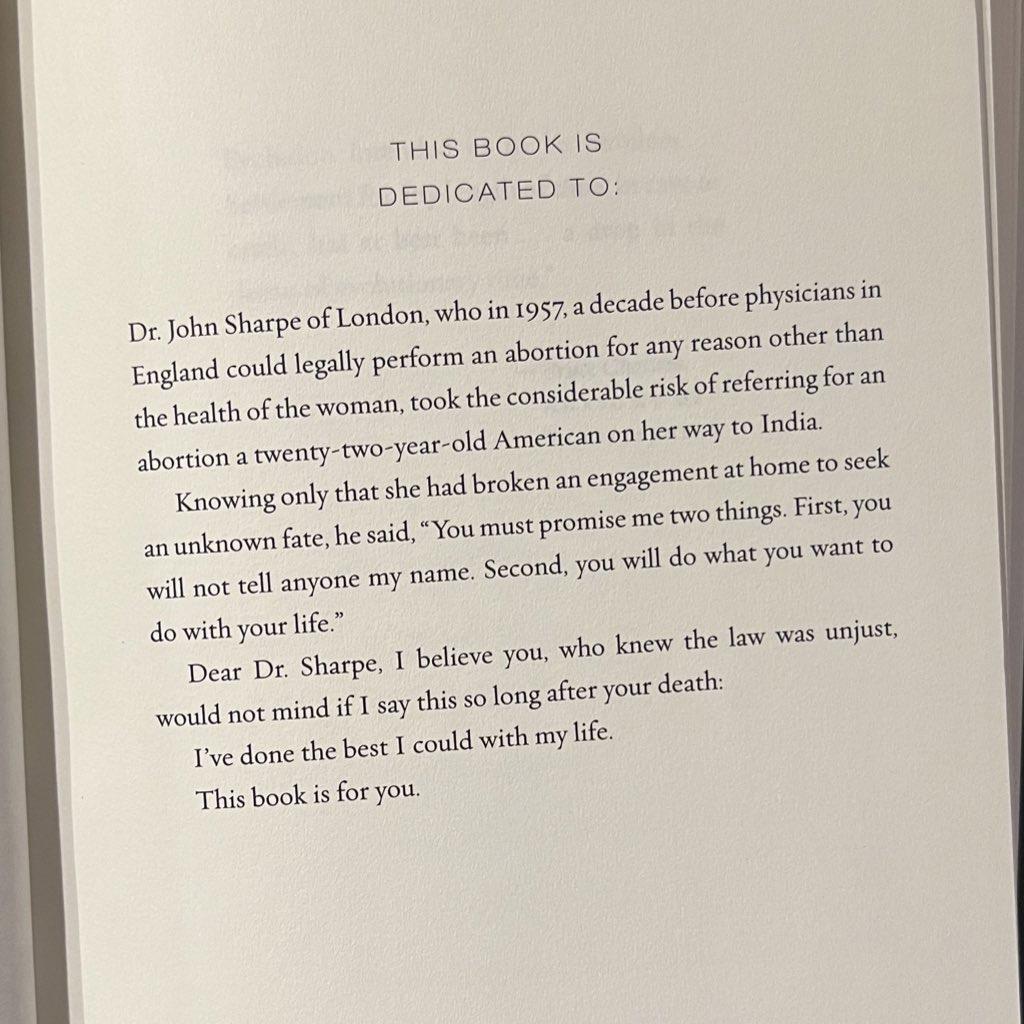
This book is dedicated to: Dr. John Sharpe, of London who in 1957, a decade before physicians in England could legally perform an abortion for any reason other than the health of the woman, took the considerable risk of referring for an abortion a 22-year old on her way to India. Knowing only that she had broken an engagement at home to seek an unknown fate, he said, "You must promise me two things. First, you will not tell anyone my name. Second, you will do what you want to do with your life." Dear Dr. Sharpe, I believe you, who knew the law was unjust, would not mind if I say this so long after your death: I’ve done the best I could with my life. This book is for you.
  • Copy link
  • Flag this post
  • Block
Book dedications bot
@dedication_bot@stefanbohacek.online  ·  activity timestamp 4 days ago

My Life on the Road by Gloria Steinem #books #literature #dedication

This book is dedicated to: Dr. John Sharpe, of London who in 1957, a decade before physicians in England could legally perform an abortion for any reason other than the health of the woman, took the considerable risk of referring for an abortion a 22-year old on her way to India. Knowing only that she had broken an engagement at home to seek an unknown fate, he said, "You must promise me two things. First, you will not tell anyone my name. Second, you will do what you want to do with your life." Dear Dr. Sharpe, I believe you, who knew the law was unjust, would not mind if I say this so long after your death: I’ve done the best I could with my life. This book is for you.
  • Copy link
  • Flag this post
  • Block
Project Gutenberg
Project Gutenberg
@gutenberg_org@mastodon.social  ·  activity timestamp 5 days ago

Poem of the week: To Wordsworth by Percy Bysshe Shelley

The radical young poet’s backhanded tribute to the older writer is a stern judgment on his lapsed political idealism

by Carol Rumens

https://www.theguardian.com/books/2026/feb/09/poem-of-the-week-to-wordsworth-by-percy-bysshe-shelley

To Wordsworth & Alastor; or, The Spirit of Solitude at PG:
https://www.gutenberg.org/ebooks/4800

#books #literature #poetry

Portrait of William Wordsworth by Sir William Boxall, 1831.

The oil painting depicts the great Romantic poet in his early sixties, with white hair, wearing a dark coat and cravat, rendered in warm brown tones with loose, atmospheric brushwork against a dark background.

https://commons.wikimedia.org/wiki/William_Wordsworth#/media/File:William-Wordsworth.jpg
Portrait of William Wordsworth by Sir William Boxall, 1831. The oil painting depicts the great Romantic poet in his early sixties, with white hair, wearing a dark coat and cravat, rendered in warm brown tones with loose, atmospheric brushwork against a dark background. https://commons.wikimedia.org/wiki/William_Wordsworth#/media/File:William-Wordsworth.jpg
Project Gutenberg

The Complete Poetical Works of Percy Bysshe Shelley — Complete by Shelley

Free kindle book and epub digitized and proofread by volunteers.
the Guardian

Poem of the week: To Wordsworth by Percy Bysshe Shelley

The radical young poet’s backhanded tribute to the older writer is a stern judgment on his lapsed political idealism
  • Copy link
  • Flag this post
  • Block
EveryLibrary
EveryLibrary
@everylibrary@mastodon.social  ·  activity timestamp 6 days ago

Let’s show that Americans love their libraries! Like, follow, and share!

#library #libraries #read #reading #book #books #librarylove #author #publiclibrary #literature #lit

Sorry, no caption provided by author
  • Copy link
  • Flag this post
  • Block

Bonfire social

This is a bonfire demo instance for testing purposes

Bonfire social: About · Code of conduct · Privacy · Users · Instances
Bonfire social · 1.0.1 no JS en
Automatic federation enabled
Log in Create account
  • Explore
  • About
  • Members
  • Code of Conduct